 The Hosting Lexicon
Performance terms
The short version
- Bandwidth is how much data a connection can carry each second. Data transfer is how much data actually moved in a month.
- Latency is the delay before data arrives.
- Uptime is how much of the time a site is working. An SLA is the host's written promise about it.
- Caches and CDNs keep copies of a site nearer to visitors, so pages load faster.
Bandwidth
Bandwidth is how much data can pass through a connection in a set amount of time.[1]
It is counted in bits per second. A common unit is megabits per second, written Mbps.[1]
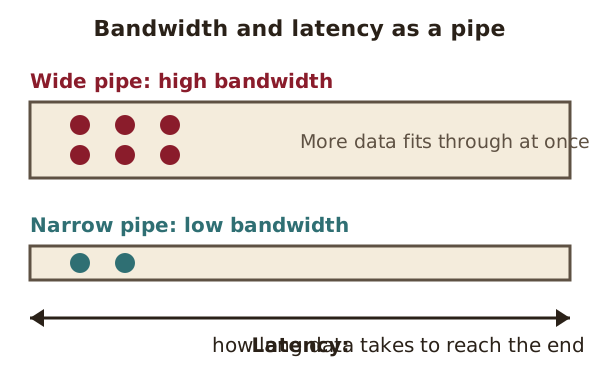
Think of a water pipe. Bandwidth is how wide the pipe is. A wider pipe lets more water through at once, but it does not make the water travel faster.
See also: Data transfer · Latency · Unmetered.
Data transfer
Data transfer is the total amount of data that moved in and out of a server, counted in bytes.[2]
Some hosts count only the data going out to visitors.[2] Each time someone views a page, its text and images count towards the total.
Hosting plans often call this "bandwidth", though it is really a monthly amount. Over time, hosts moved to billing by gigabytes moved rather than by line speed.[2]
See also: Bandwidth · Overage.
Latency
Latency is the time it takes for requested data to reach its destination.[3]
Low latency means little delay, which is good.[3] Distance is a big cause of delay.[4] A visitor in Perth will usually wait longer for a server in London than for one in Sydney.
In the pipe picture, latency is how long the water takes to reach the far end. A wide pipe can still be a long one.
See also: Bandwidth · Content delivery network (CDN).
Uptime
Uptime is the share of time a system is working and available.[5] Its opposite is downtime.[5]
For a website, it is usually given as the percentage of a year the site can be reached.[6] Not every host publishes its uptime figures.[6]
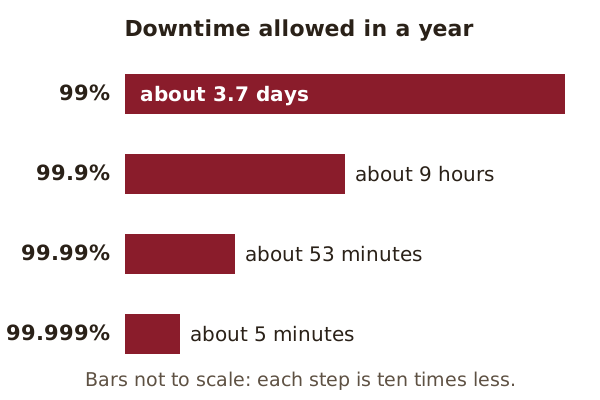
Uptime is often counted in nines. 99% is "two nines" and 99.9% is "three nines".[7] Each extra nine cuts the allowed downtime by ten times.[7]
There is a handy rule for this. Five nines allows about 5 minutes of downtime a year. Four nines allows about 50 minutes, and three nines about 500 minutes.[7]
See also: Service level agreement (SLA) · Load balancing.
Service level agreement (SLA)
An SLA is an agreement between a provider and a customer that sets out what the service will deliver.[8]
A hosting SLA usually names an uptime target. It may leave out planned downtime for maintenance.[6] If the host misses the target, it often gives a partial refund.[6]
For example, an SLA might promise three nines but exclude a weekly maintenance window. Each host words its SLA differently, so the details matter.
See also: Uptime · Managed hosting.
Cache
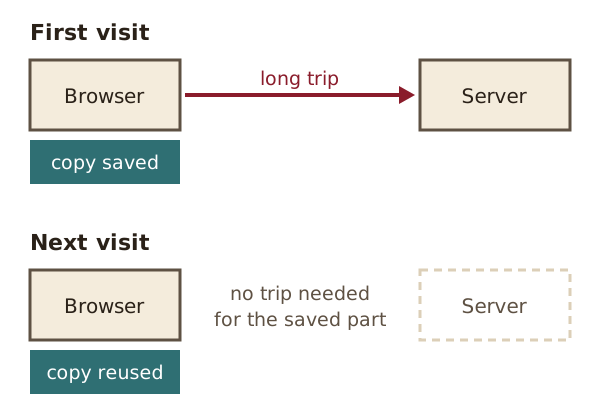
A cache stores a copy of a response and reuses it the next time the same thing is asked for.[9]
Your own browser is the most common example.[9] It keeps a site's logo after the first visit. On the next page, it shows the saved copy instead of downloading it again.
Servers and networks keep caches too. The closer the cache is to the visitor, the faster the reply.[9]
See also: Content delivery network (CDN) · Static site.
Content delivery network (CDN)
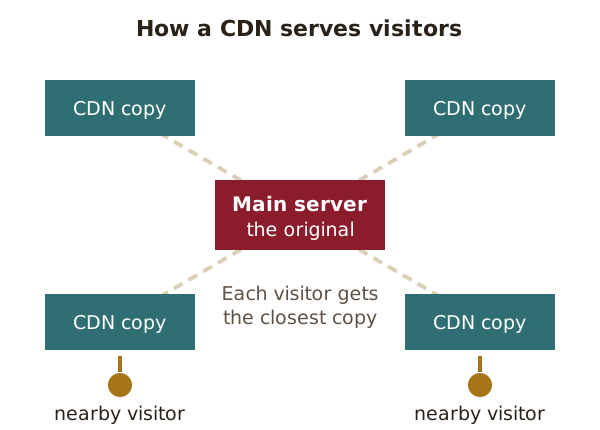
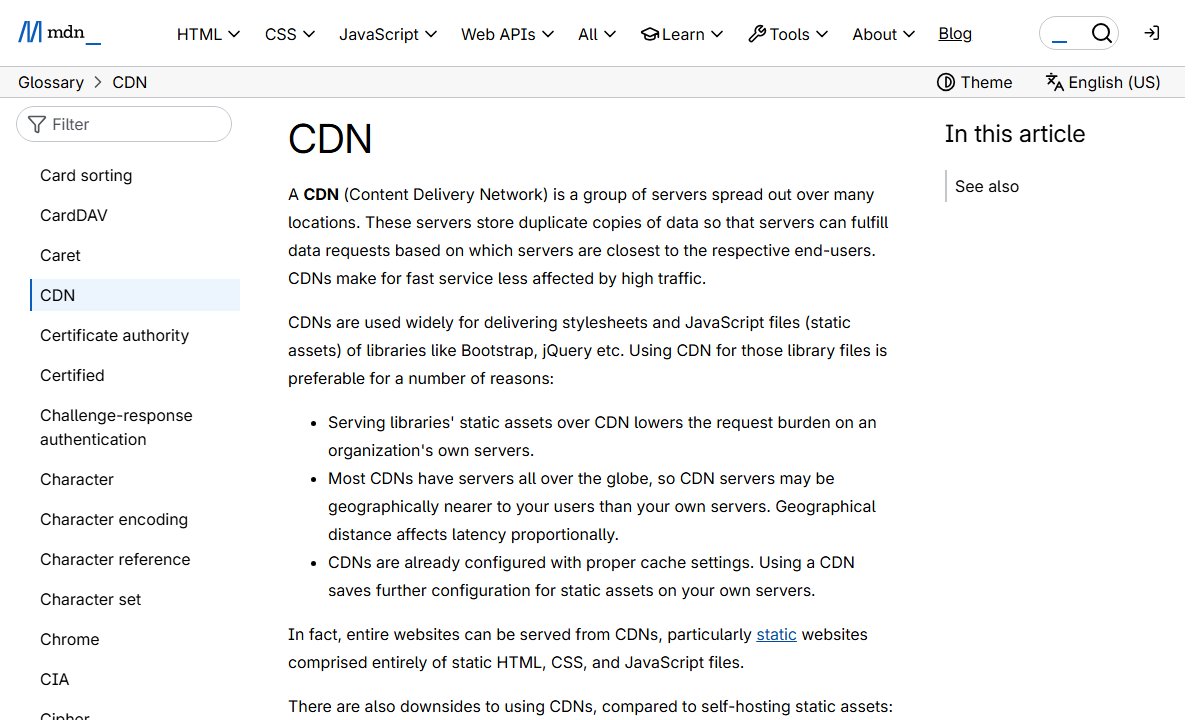
A CDN is a group of servers spread across many places that keep copies of a site's files.[4]
Each visitor is served from a nearby copy.[4] Less distance means less delay. A CDN also copes better with busy times.[4]
For example, a site's main server might sit in Frankfurt. A visitor in Tokyo could get its images from a CDN server in Japan instead.
The catch is that the site now depends on one more company.[4]
Origin: CDNs arose in the late 1990s to ease slowdowns on the internet.[10]
See also: Cache · Latency · Static site.
Load balancing
Load balancing spreads work across several computers instead of one.[11]
The aim is to stop one machine being swamped while others sit idle.[11] A supermarket that opens more tills when queues grow is doing the same thing.
On a busy site, a load balancer can share visitors out between several servers.
See also: Cloud hosting · Uptime.
Sources
- Bandwidth (MDN Glossary), MDN Web Docs (accessed 2026-10-18)
- Dedicated hosting service, Wikipedia (accessed 2026-10-18)
- Latency (MDN Glossary), MDN Web Docs (accessed 2026-10-18)
- CDN (MDN Glossary), MDN Web Docs (accessed 2026-10-18)
- Uptime, Wikipedia (accessed 2026-10-18)
- Web hosting service, Wikipedia (accessed 2026-10-18)
- High availability, Wikipedia (accessed 2026-10-18)
- Service-level agreement, Wikipedia (accessed 2026-10-18)
- HTTP caching, MDN Web Docs (accessed 2026-10-18)
- Content delivery network, Wikipedia (accessed 2026-10-18)
- Load balancing (computing), Wikipedia (accessed 2026-10-18)